Nurses in 21st Century
Introduction:
The Next Generation NCLEX (NGN) was introduced to address the growing need for nurses with strong clinical judgment and decision-making skills. Unlike the traditional NCLEX, NGN evaluates how candidates analyze patient information, prioritize care, and evaluate outcomes using case-based scenarios.
Why I Chose This Research
This research was chosen because it reflects a pressing educational priority: ensuring that nursing graduates are
fully prepared for NGN success. As a nurse educator, I have observed how simulation enhances clinical judgment and confidence among students. By making this article available to the school, the goal is to support curriculum alignment with NGN requirements and provide faculty with evidence-based strategies to improve student outcomes
Clinical Judgment and the NGN
The NGN is built upon the NCSBN Clinical Judgment Measurement Model (CJMM), which evaluates a nurse’s ability to:
- Recognize cues
- Analyze information
- Generate and prioritize hypotheses
- Take action
- Evaluate outcomes (NCSBN, 2019).
This model reflects the complexity of real-world practice, where safe patient care depends on timely and accurate clinical decisions
Simulation as Alignment to NGN
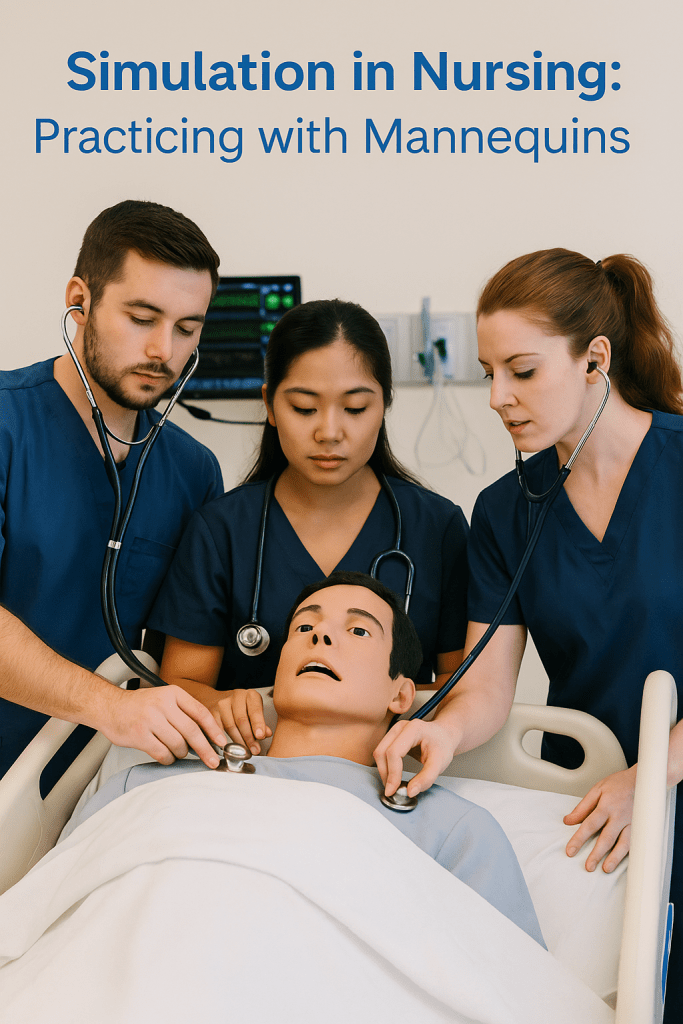
Simulation provides a direct method of preparing students for NGN by replicating the same cognitive processes tested on the exam. Evidence supports that simulation:
- Improves clinical judgment and critical thinking (Dreifuerst & Decker, 2020).
- Standardizes exposure to complex clinical scenarios across all learners (INACSL Standards Committee, 2021).
- Provides safe practice for error recognition and correction without patient harm (Cheng et al., 2020).
- Reinforces reasoning through structured debriefing, mirroring NGN’s requirement to justify responses (Turner & Harder, 2018).
Evidence-Based Impact
Research demonstrates that students who engage in simulation-based learning show:
- Higher performance in decision-making and prioritization (Al-Ghareeb et al., 2020).
- Increased confidence and readiness for clinical practice (Kolbe et al., 2020).
- Better NCLEX pass rates when simulation is integrated systematically into curricula (Hayden et al., NCSBN Simulation Study, 2014).
- Hayden et al. (2014, NCSBN National Simulation Study): Up to 50% of clinical hours can be replaced with simulation without negative impact on NCLEX pass rates.
- Dreifuerst & Decker (2020): Structured debriefing after simulation significantly improves clinical judgment.
- Cheng et al. (2020): Psychological safety in simulation enhances learner engagement and outcomes.
- Al-Ghareeb et al. (2020): Simulation reduces anxiety and improves decision-making and prioritization skills.
- Kolbe et al. (2020): Simulation fosters teamwork, communication, and confidence in clinical practice.
Conclusion
Simulation is not an optional enhancement—it is a necessity in modern nursing education. By aligning with NGN, simulation provides the structure for students to practice, reflect, and master clinical judgment in a safe environment. For schools, integrating simulation ensures accreditation compliance, improved NCLEX outcomes, and the production of competent, practice-ready graduates.
Making this research available to the school serves as a call to action: nursing education must evolve in step with NGN. Investing in simulation-based education is not just about exam success—it is about preparing the next generation of nurses to deliver safe, effective, and compassionate care in today’s complex healthcare systems.

Research Works done by:
Juram Gorriceta MPA, BSN RN LSSHP, Simulation Nurse Educator.
 Healthcarebeyond
Leave a comment